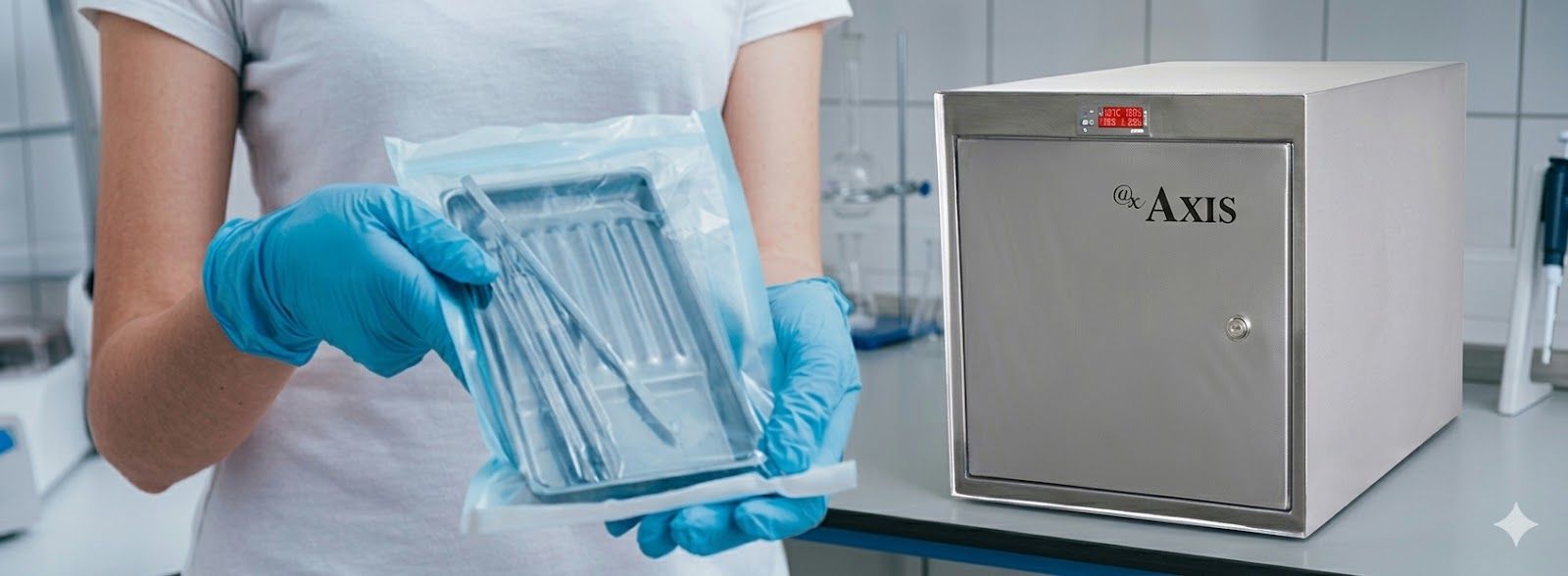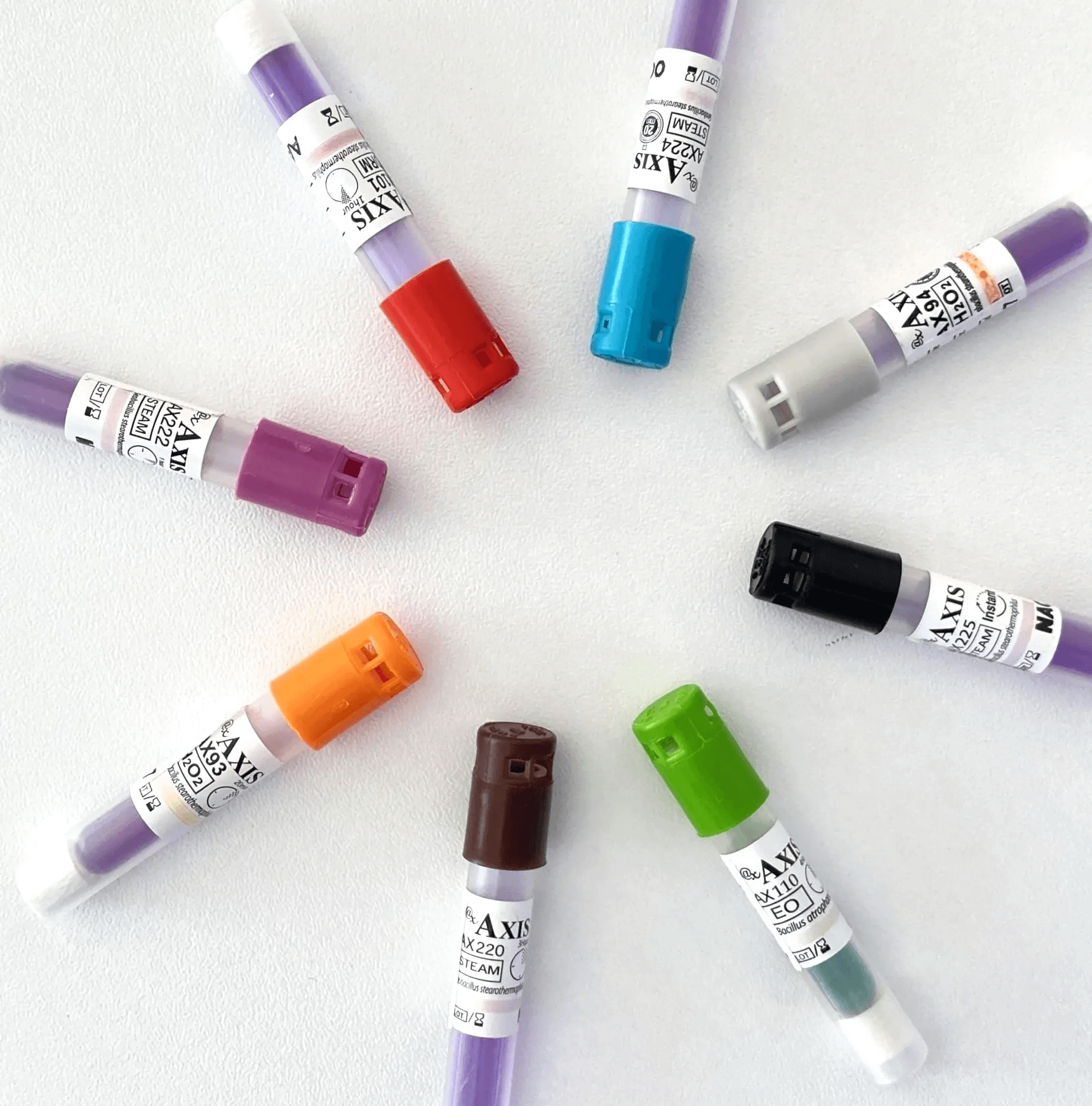
A biological indicator (BI) is a test system used to verify that a sterilization process has been genuinely effective. It contains bacterial spores—the most resistant form of microorganisms to the sterilization method being tested. After the cycle, the BI is incubated; if the spores show no growth, the process is confirmed successful. Unlike chemical or physical indicators, biological indicators provide direct proof that living microorganisms have been destroyed, which is why they are recognized as the gold standard of sterilization validation by international standards bodies.
How Biological Indicators Verify Sterility
During sterilization validation, a biological indicator is placed inside the load and subjected to the normal cycle conditions. After exposure, the BI is incubated under conditions that support spore growth. Growth indicates failure; the absence of growth confirms that the process achieved the required microbial kill. This direct testing of microbial viability is the only way to demonstrate that the sterilization meets the Sterility Assurance Level (SAL) of ≤10⁻⁶ probability of a non‑sterile item, as required in pharmaceuticals, medical devices, and healthcare settings.
Most Resistant Spores: Geobacillus stearothermophilus and Bacillus atrophaeus
Biological indicators are standardized to contain the most resistant spores relevant to the sterilization method. For steam sterilization (autoclaves and other moist‑heat systems), the organism of choice is Geobacillus stearothermophilus, whose spores are extremely resistant to heat and steam and are widely used at 121–134 °C. For dry heat and ethylene oxide (EtO) sterilization, the standard is Bacillus atrophaeus, a spore‑former known for its robust resistance to heat and gaseous agents.
By using these highly resistant spores, the sterilization process is challenged under worst‑case conditions. If the process can reliably inactivate G. stearothermophilus or B. atrophaeus, it is considered capable of destroying all less resistant microorganisms present on the product or device.
Why Biological Indicators Are a Must‑Use in Sterilization Validation
Biological indicators are not optional—they are essential components of any proper sterilization validation program. They are required by pharmacopeias (USP, EP, JP) and ISO standards for medical devices, pharmaceuticals, and healthcare facilities, and they provide the only direct evidence that sterilization has actually killed viable microorganisms, not just that the equipment ran correctly.
They are also critical for detecting hidden failures, such as uneven temperature distribution, improper loading, or equipment malfunctions that physical or chemical indicators alone cannot reveal. By using BIs in initial validation, periodic monitoring, and after any process changes, organizations ensure ongoing compliance, patient safety, and product quality.
In short, biological indicators are the cornerstone of reliable sterilization validation: they turn theoretical process parameters into provable microbial kill, making them a must‑use tool wherever sterility is non‑negotiable.
References (English):
• ISO 11138 series on biological indicators – EN ISO 11138‑8:2021